makerspace
What happens when loneliness becomes a national crisis?
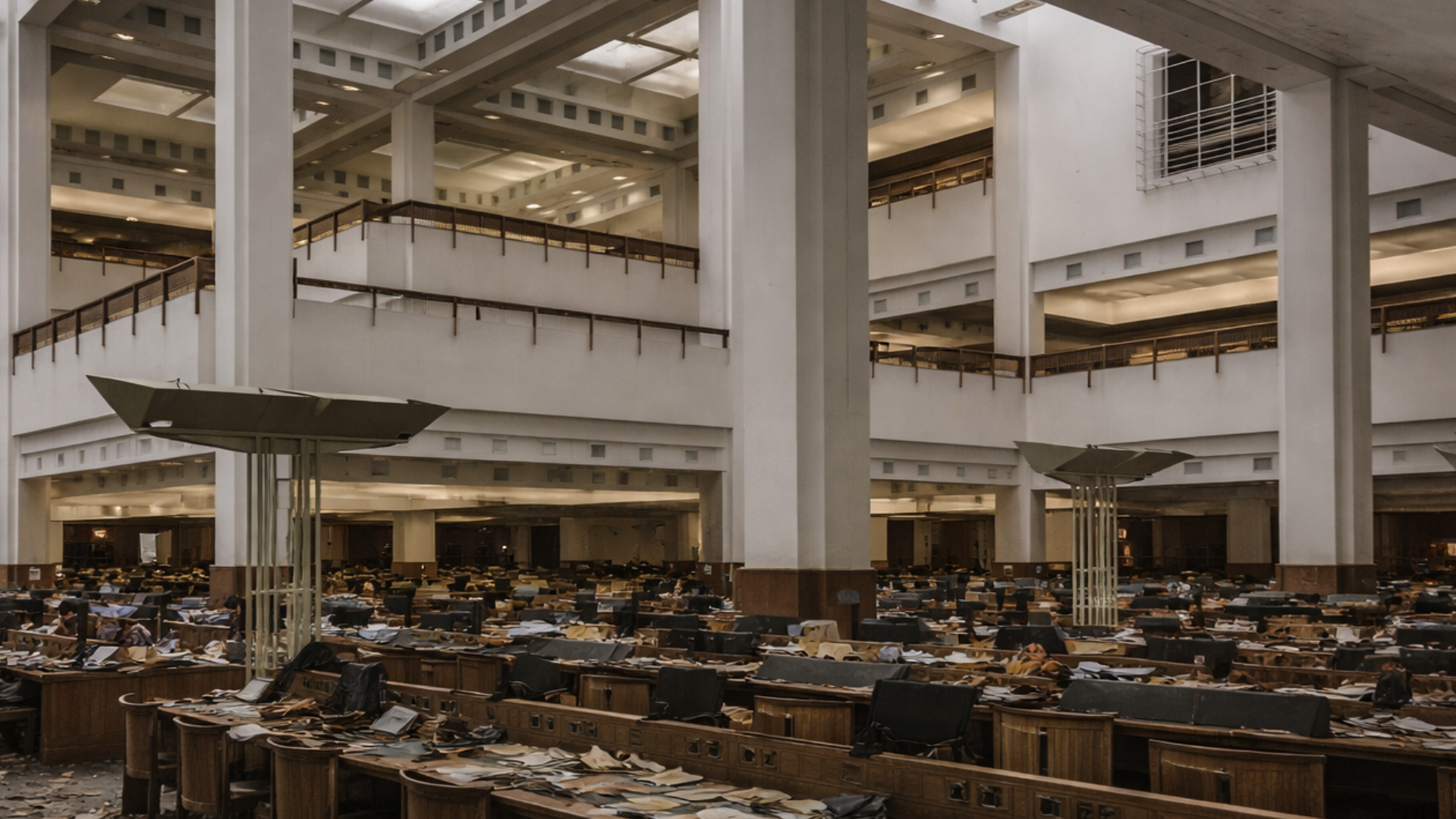
In a future where automation has replaced both physical and creative labour, society has become increasingly isolated. Work, once a source of identity and social connection, has disappeared. Libraries sit empty, community halls decay, and public trust has eroded alongside the spaces that once sustained it.
People no longer gather.
They consume.
Alone.
DYSTOPIA
By 2036, automation has fundamentally reshaped society.
Millions of jobs disappear.
As work vanishes, people lose more than employment — they lose identity, routine, and purpose.
At the same time, the social spaces that once connected communities begin to decay:
Libraries empty
Churches close
Streets feel unsafe
Public gathering spaces deteriorate
Citizens retreat further into isolated digital routines while AI systems increasingly simulate companionship and interaction.
Loneliness becomes one of the largest public health crises in the country.
People no longer trust social spaces.
They stop showing up.
DYSTOPIA
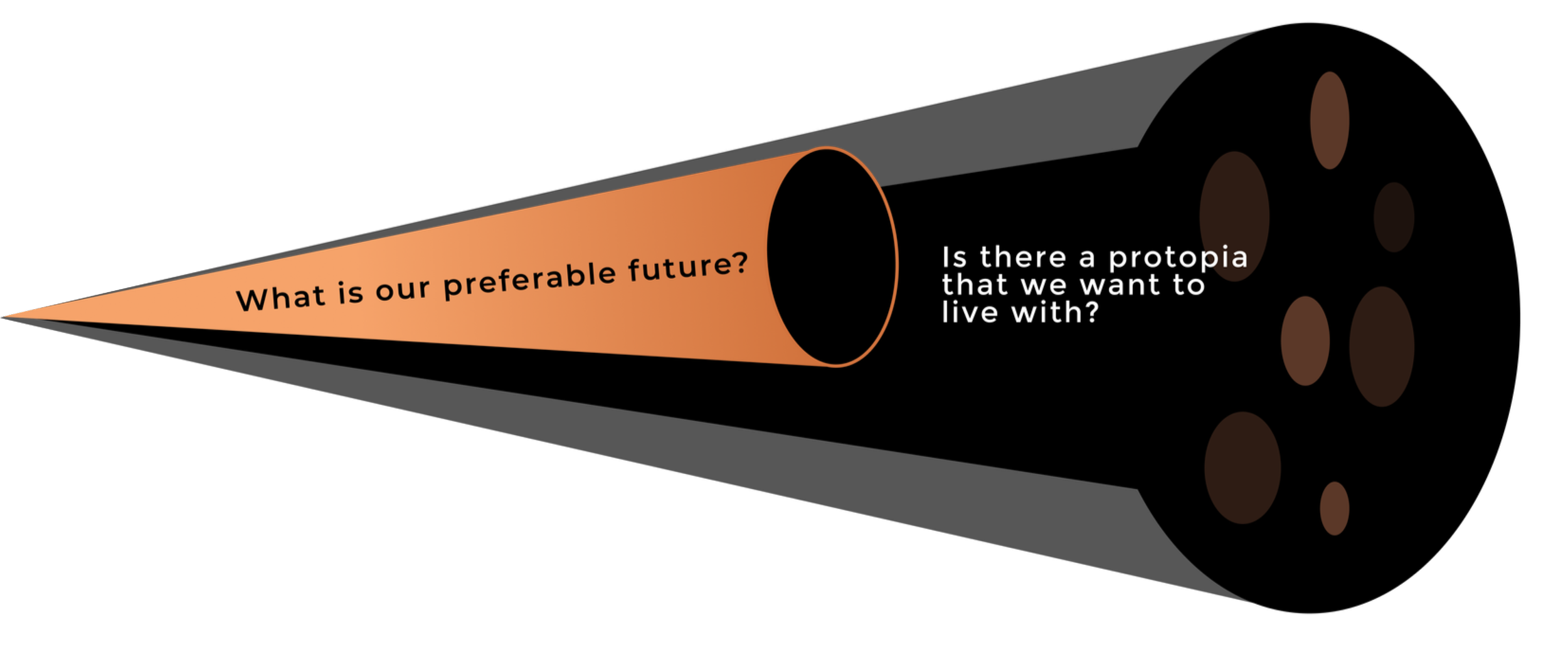
Automation eliminated jobs → loss of work-based identity and purpose
Social spaces (churches, libraries, streets) fallen into ruin; people retreat into isolated routines
Over-dependence on AI to fill the interaction void; loneliness declared a national health crisis
UTOPIA
Community makerspaces retrofitted into existing social spaces (e.g. Whitechapel Ideas Store Library)
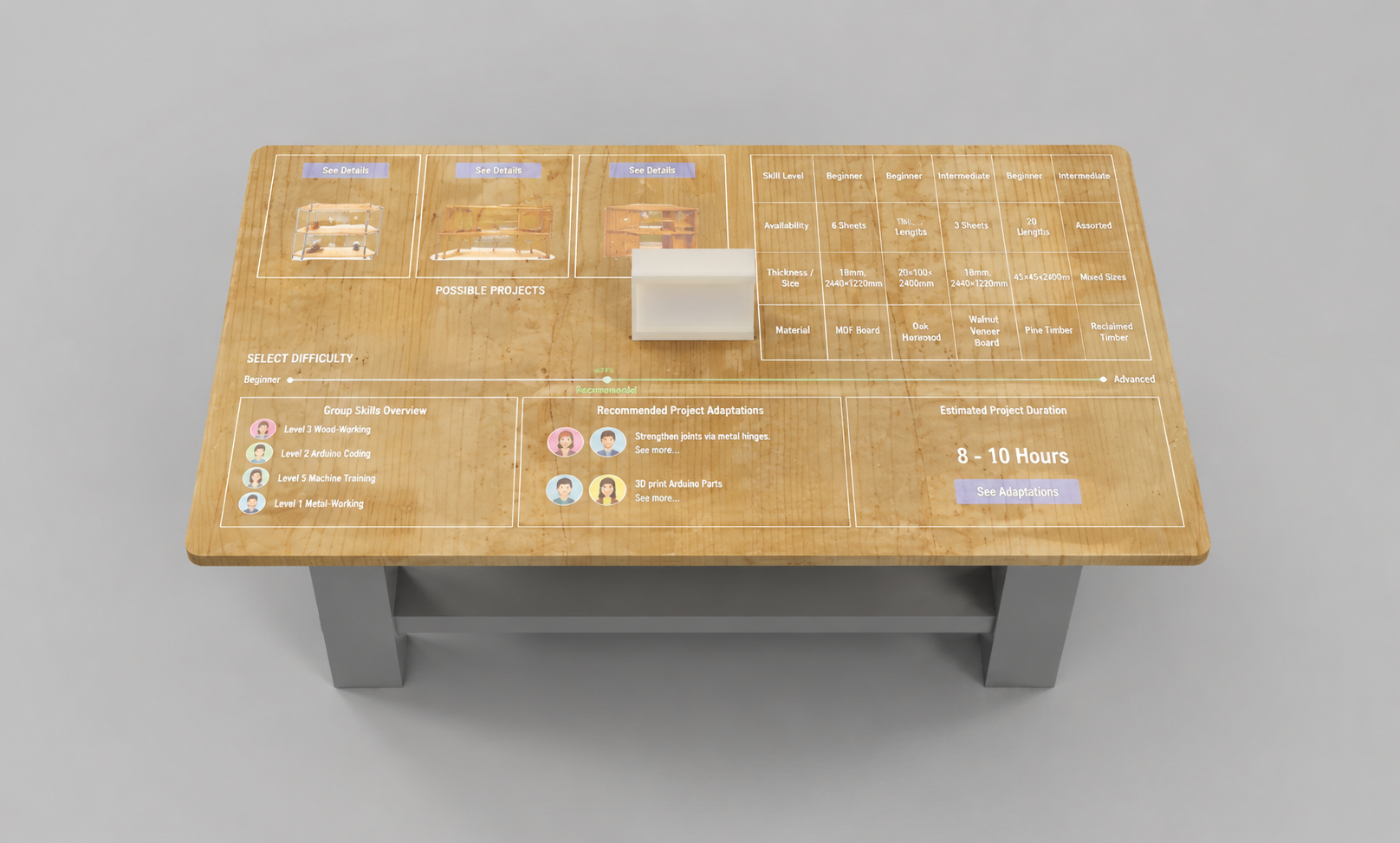
Central feature: an interactive smart table with overhead projector/camera sensors displaying material guides, tutorials, cut dimensions, project suggestions, and skill-sharing prompts
Tech supports humans — encourages asking for help and teaching each other, not replacing interaction
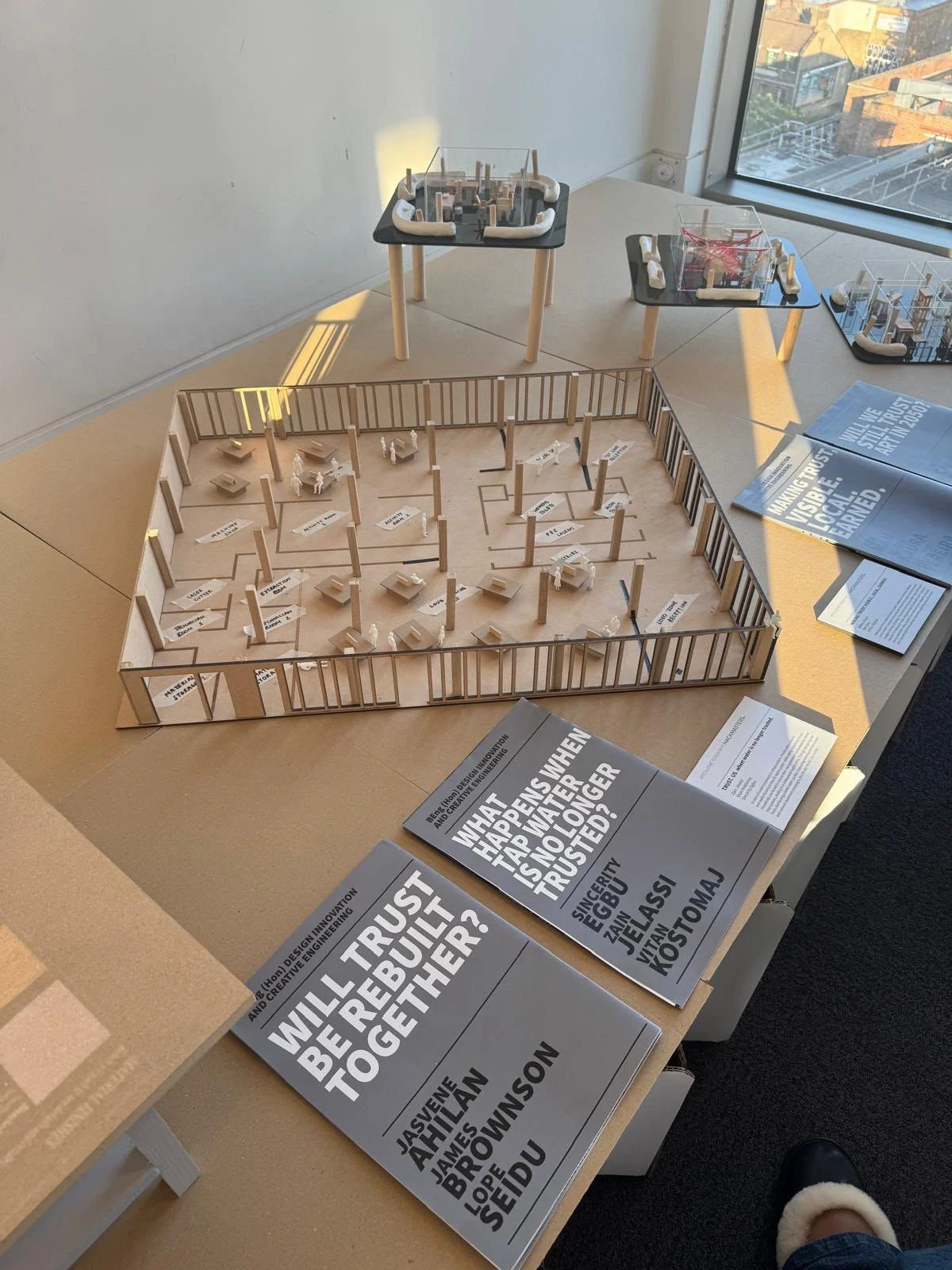
Ecosystem of activity rooms, fabrication labs, quiet zones, and shared workshops
Low-pressure, all ages/abilities; gives people a reason to show up, a skill to build, a community to belong to
UTOPIA
In response, a new generation of community makerspaces emerges.
Rather than constructing entirely new buildings, the proposal retrofits existing public spaces such as libraries and community centres into collaborative ecosystems designed around shared making.
At the centre of each space is an interactive co-design table.
Using overhead projectors, camera sensors, and adaptive interfaces, the table becomes a shared social tool capable of:
Displaying tutorials and fabrication guides
Recommending tools and materials
Suggesting collaborative projects
Sharing dimensions and cut lengths
Enabling skill-sharing prompts
Supporting safety guidance and workflows
Importantly, the technology is not designed to replace people.
It exists to encourage interaction between them.
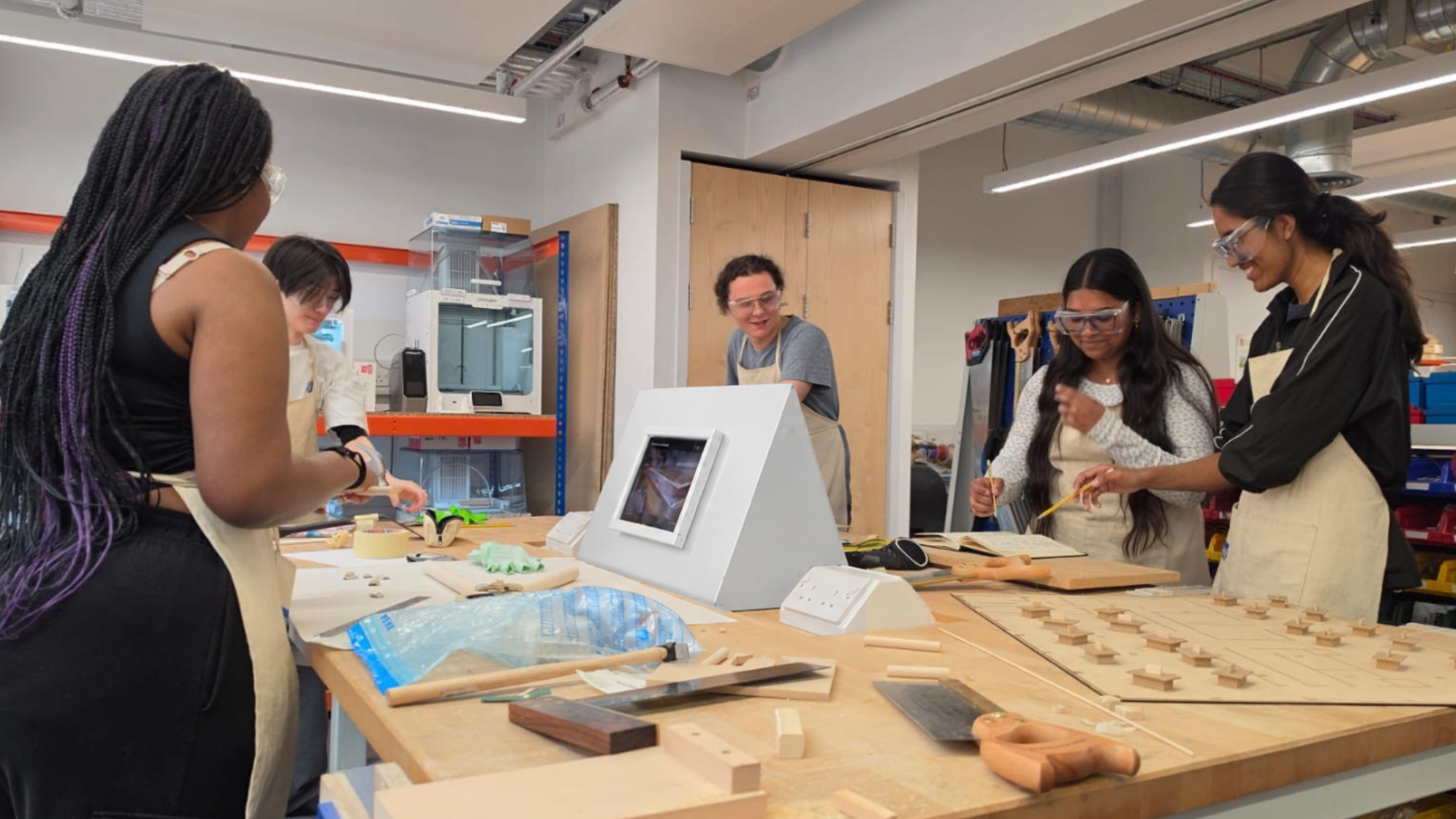
The system deliberately prompts users to:
Ask others for help
Teach new skills
Collaborate across generations
Build things together
Over time, repeated acts of making create familiarity. Familiarity creates trust.
Around the table grows a wider ecosystem of:
Fabrication labs
Quiet work zones
Activity rooms
Shared workshops
Social gathering areas
The environment is intentionally low-pressure and accessible to all ages and skill levels.
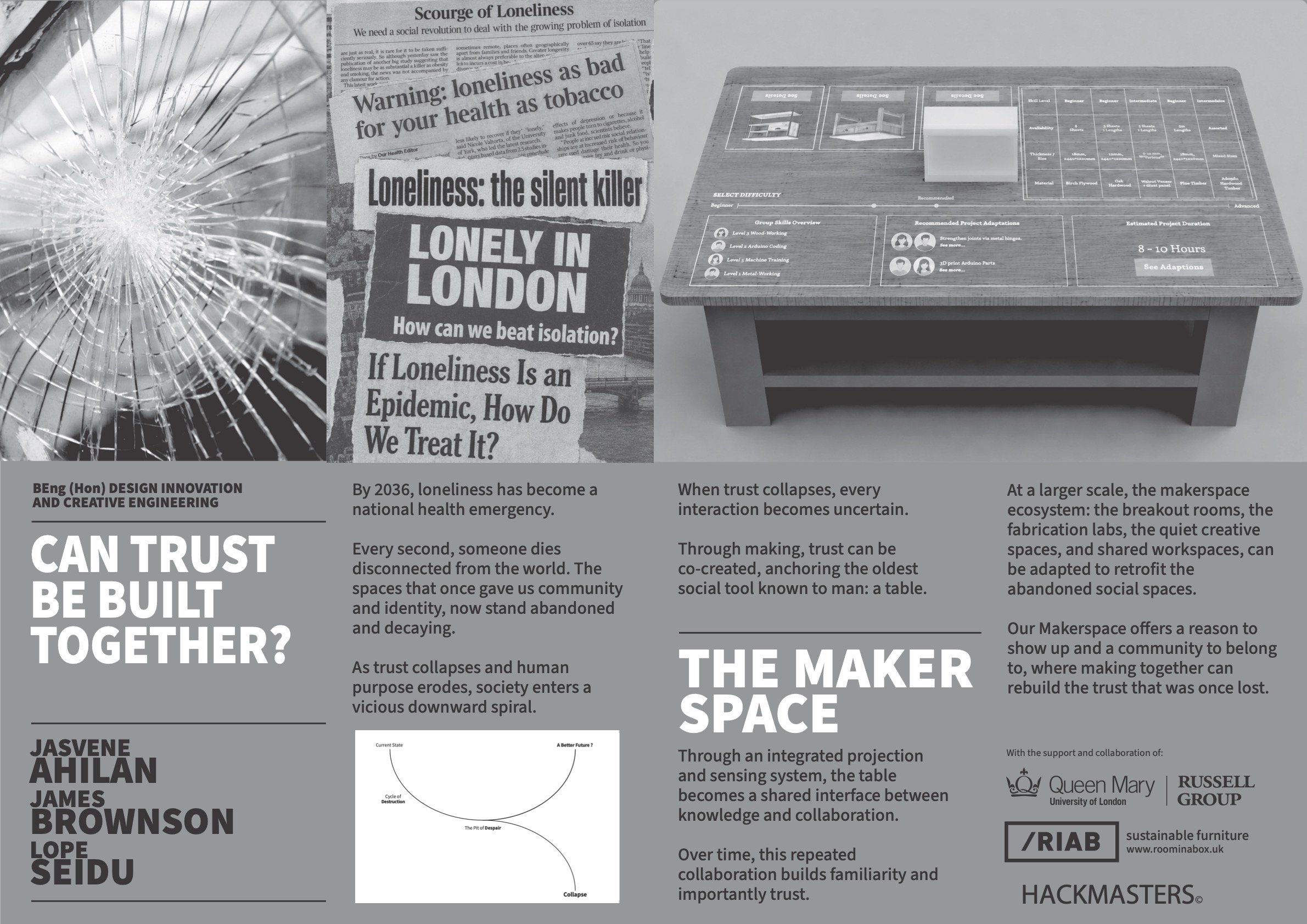
In this future, trust is rebuilt not through policy or surveillance, but through making things together.
The project reframes making not simply as productivity, but as social infrastructure.
In a world where automation has removed reasons for people to gather, the makerspace becomes a reason to show up again.
A place to learn. A place to contribute. A place to belong.
The proposal suggests that trust is not rebuilt through platforms or policies alone.
It is rebuilt physically.
Around tables.
Through conversation.
By building something together.
In this future, creativity becomes social infrastructure.
Repair becomes a civic act.
And the table once again becomes the place where trust is made.
Meet the Team
-
![]()
James Brownson
Design, Innovation & Creative Engineering
-
![]()
Lope Seidu
Design, Innovation & Creative Engineering
-
![]()
Jasvene Ahilan
Design, Innovation & Creative Engineering