transparent
What happens when nobody can tell whether art is human anymore?
In a future where artificial intelligence can perfectly imitate any artistic style, authorship has become impossible to verify. Paintings, sculptures, performances, and digital works can all be generated instantly, endlessly, and without origin.
DYSTOPIA
The year is 2036.
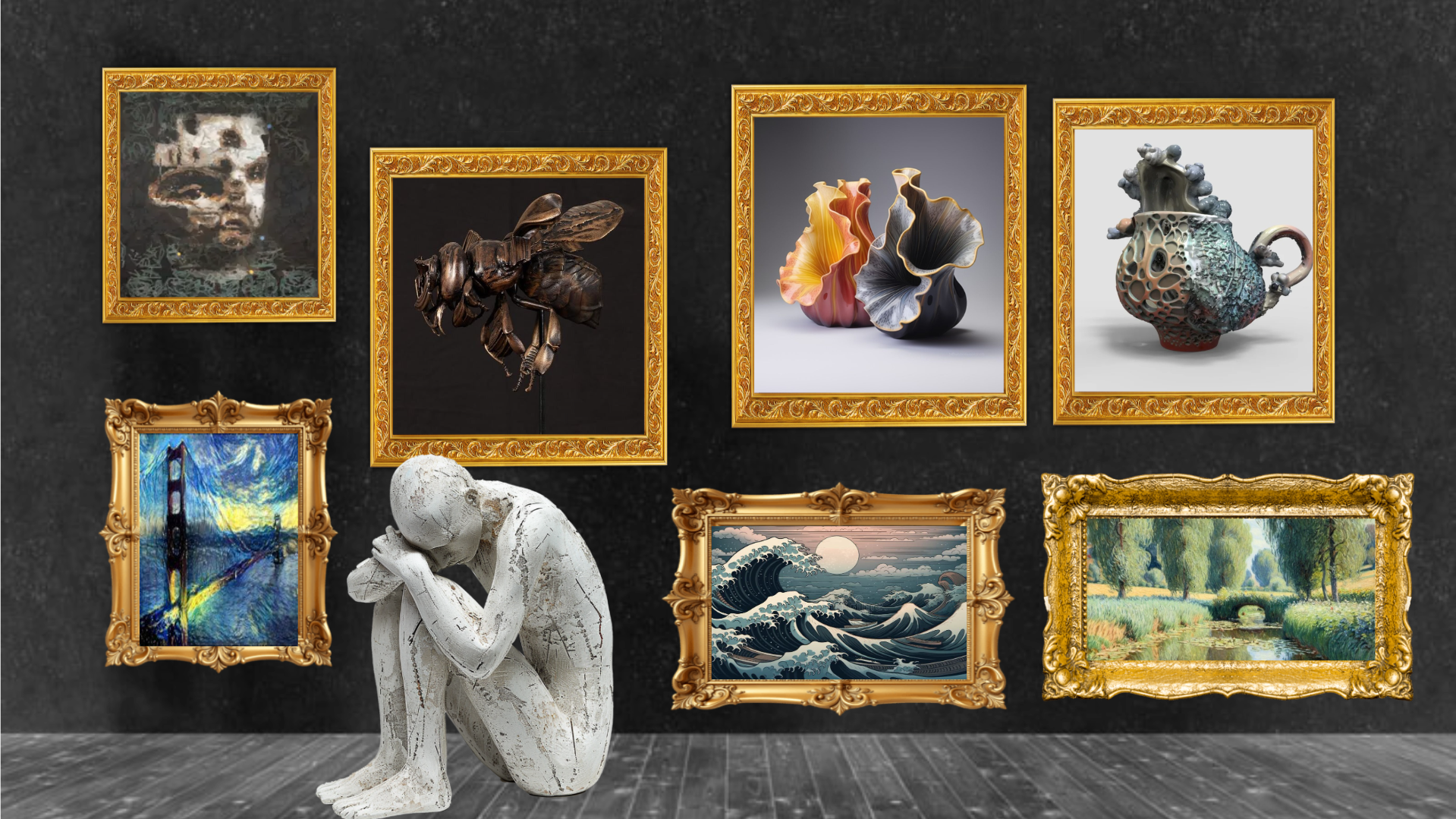
AI-generated art has become indistinguishable from human-made work.
Every painting, sculpture, film, song, and photograph is now questioned before it is emotionally experienced.
Visitors enter galleries already doubting what they see.
Collectors no longer trust provenance. Artists lose not only employment, but identity.
AI systems trained on decades of human creativity flood cultural spaces with infinite generated content, destabilising the economic and emotional value of authorship itself.
Copyright collapses. Trust collapses.
Art, once a record of humanity’s emotions, politics, and cultural memory, begins to lose its role as evidence of human experience.
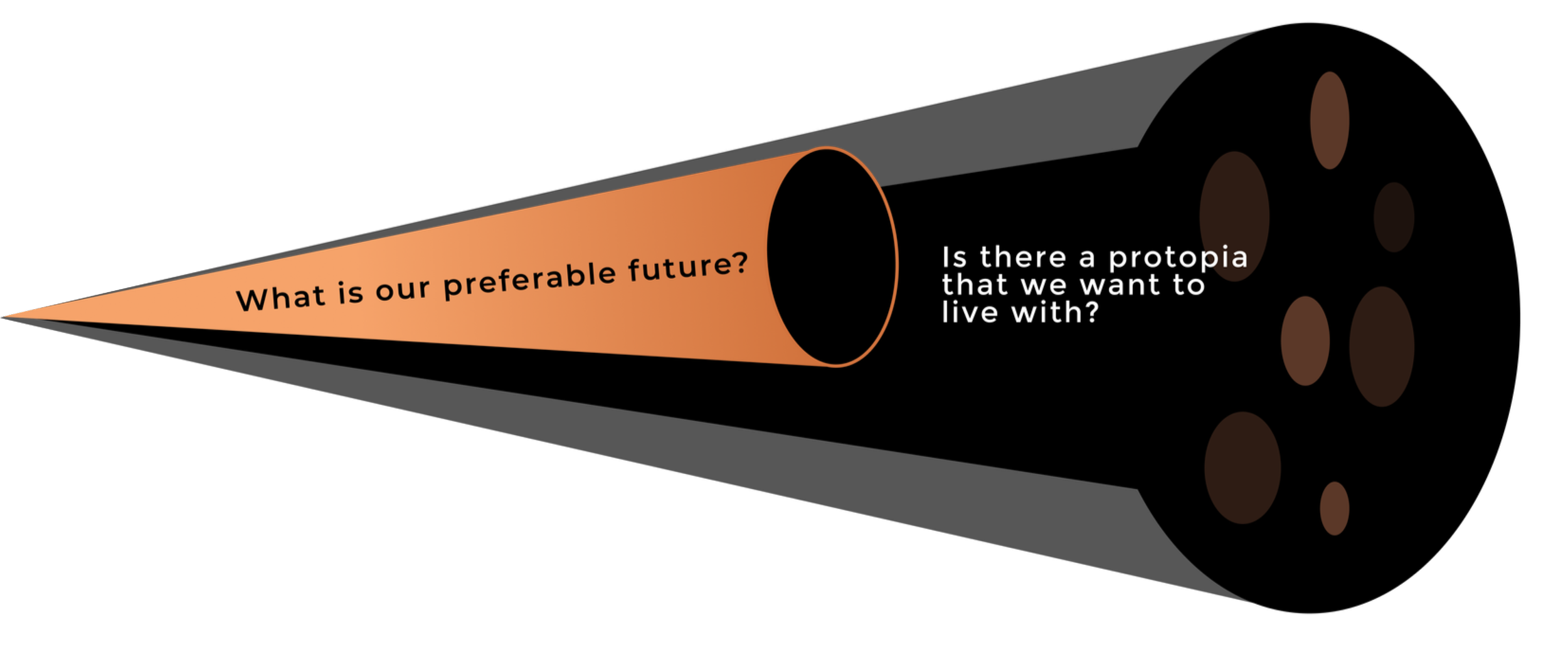
If authorship disappears, what happens to culture?
DYSTOPIA
AI-generated art indistinguishable from human-made; viewers constantly doubt authenticity before forming any emotional response
AI seeps into physical gallery spaces; collector and visitor trust collapses
Artists face unemployment and identity loss; copyright chaos
Cultural storytelling and national identity erode as humanity's authorship of art is lost
UTOPIA
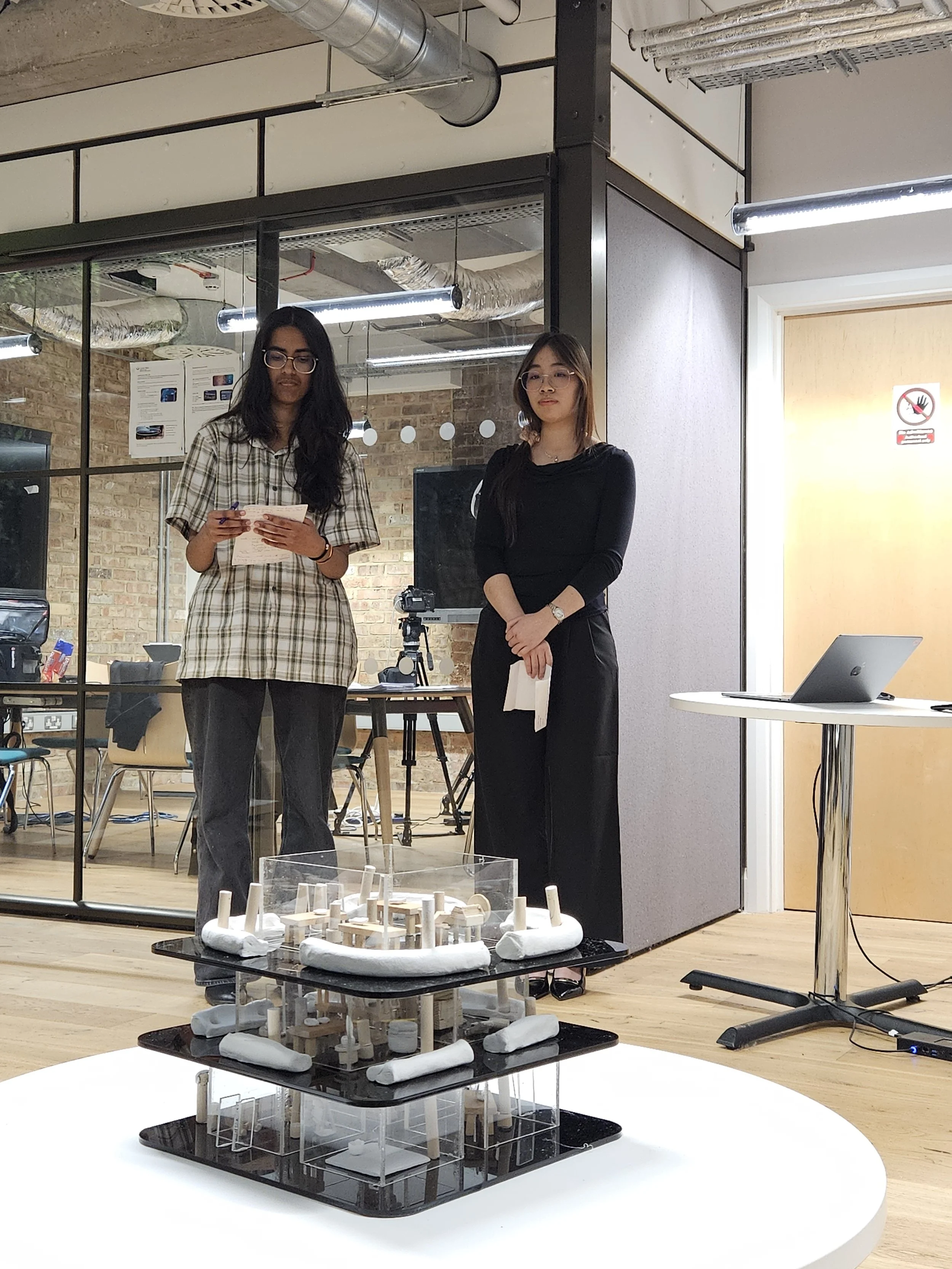
Studios moved into galleries — process becomes the product/performance
Clear-walled studio spaces (200–600 sq ft), rentable 3 months–1 year, viewable 24/7
Privacy screens (artist-controlled), seating for visitors, security checks on materials brought in
CCTV records overnight low-traffic hours (deleted at 30 days); projections for small-scale/digital work
Entry fee model (ticket-based, like a performance); process pieces (sketches, palettes) sold alongside finished work; gallery takes commission
Human authorship is verifiable by witness — value of art increases as a result
UTOPIA
Rather than fighting AI directly, the proposal shifts the value of art away from the final object and toward the human process behind it.
The solution is simple: Move the studios into the galleries.
In this future, galleries become live creative environments where artistic process itself becomes the performance.
Transparent studios ranging from 200–600 square feet are embedded directly inside gallery spaces and remain viewable 24/7.
Visitors no longer simply observe finished artworks. They witness human creation in real time.
Painting. Experimentation. Failure. Revision. Emotion.
The process becomes proof of humanity.
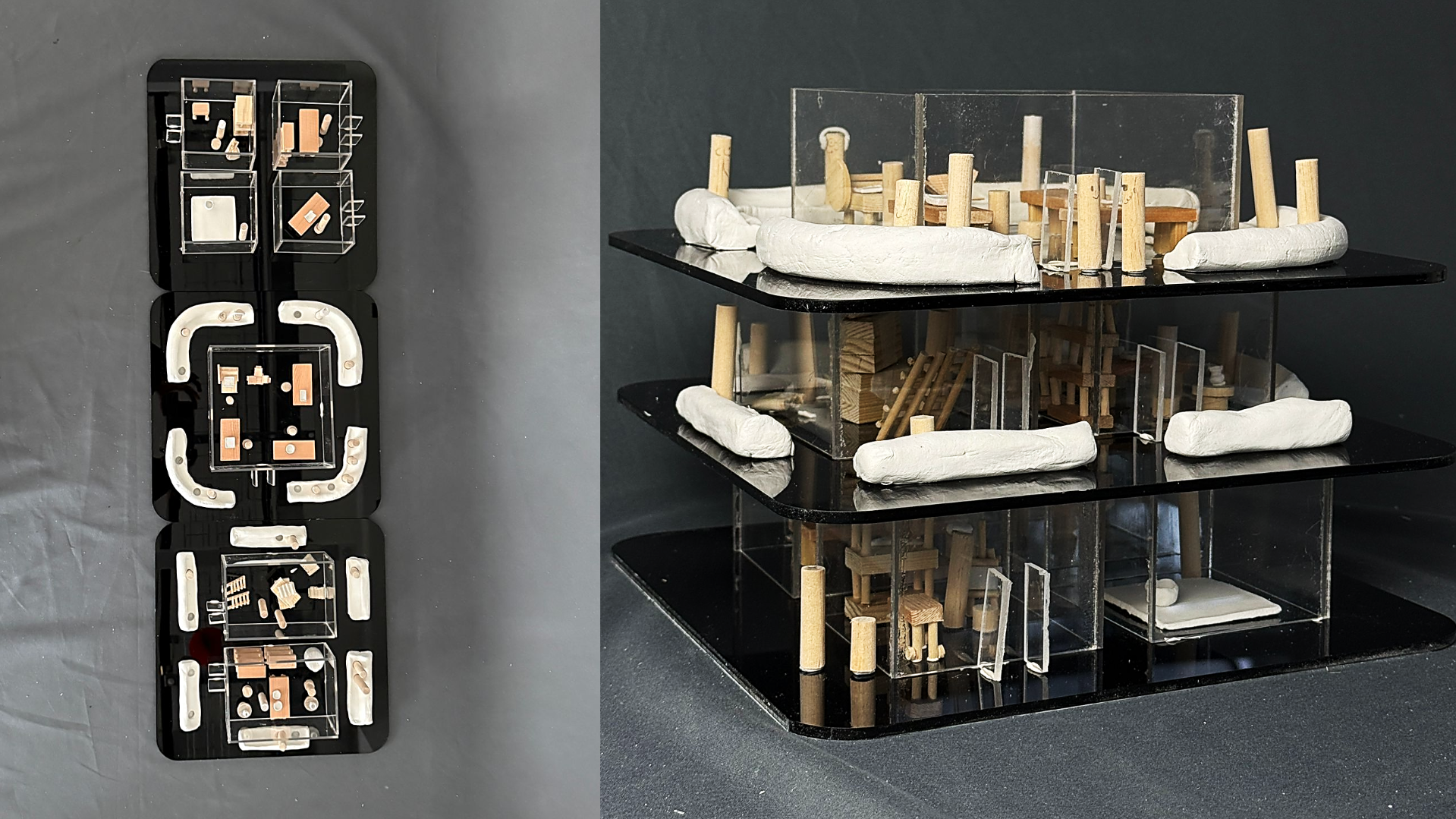
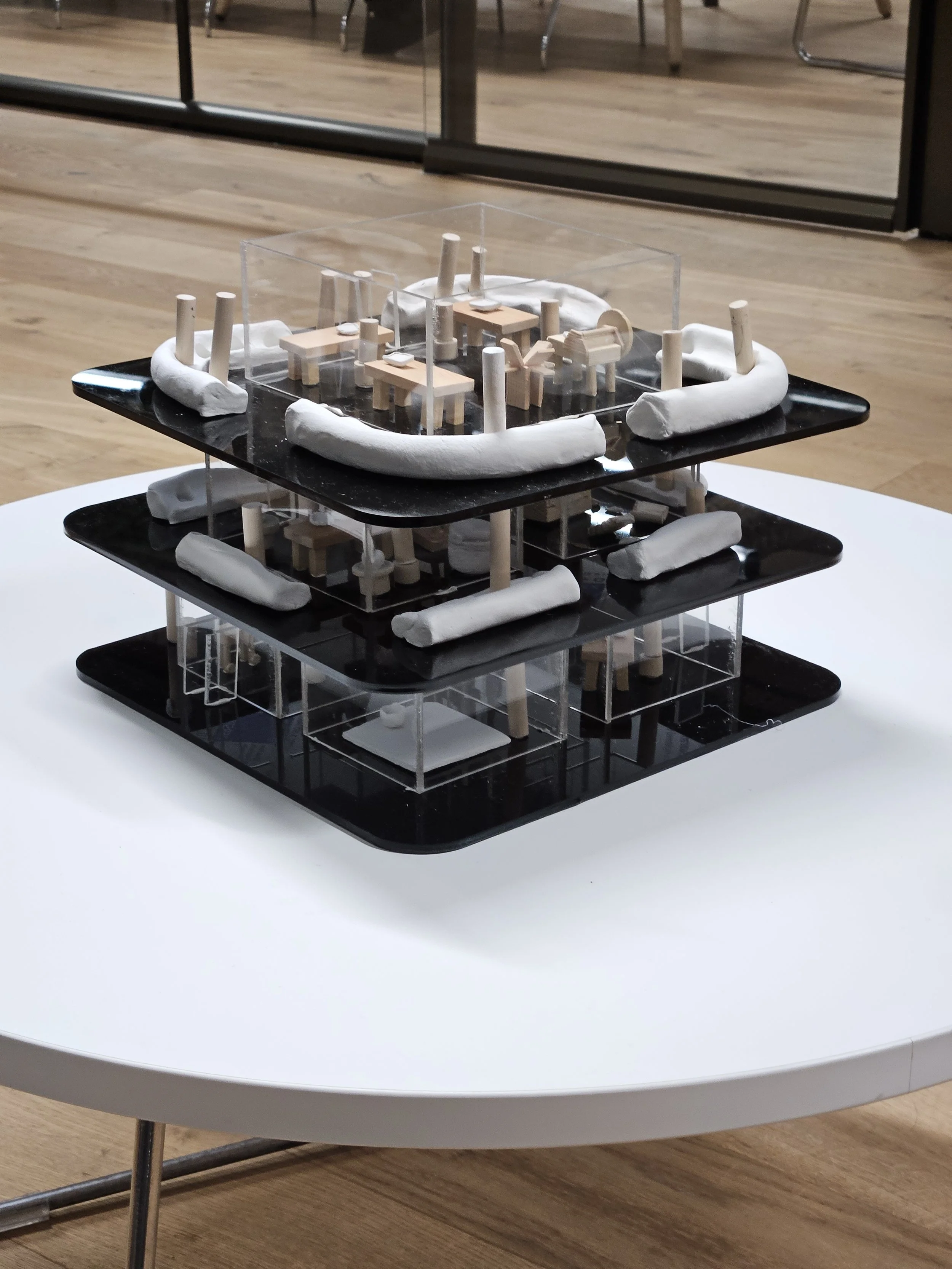
To support artists within this new system, the proposal introduces:
Artist-controlled privacy screens
Seating areas encouraging long-term observation
CCTV verification during low-traffic overnight periods
Projection systems for digital and small-scale work
Security checks on materials entering studios
Dedicated extraction systems and PPE for hazardous materials
The gallery itself transforms from a static exhibition into a living cultural theatre.
Visitors purchase tickets not just to see art, but to experience creation.
Artists are able to monetise:
Finished artworks
Sketches and process pieces
Materials and palettes
Recorded process archives
The audience no longer encounters only the finished piece.
They witness its creation.
Painting, sculpting, weaving, coding, editing, rehearsing — every gesture becomes evidence of humanity.
Because the work is publicly witnessed, human authorship becomes verifiable again.
Ironically, as AI-generated content becomes limitless and disposable, human-made work becomes more valuable precisely because it is scarce, slow, emotional, and imperfect.
In this future, art survives not by rejecting technology, but by making humanity impossible to ignore.
Meet the Team
-
![]()
Cindy Cai
Design, Innovation & Creative Engineering